
Connecting the Pelvis & Lower Limb: A Clinical Perspective
Connecting the Pelvis & Lower Limb: A Clinical Perspective
This course includes
The instructors
Overview
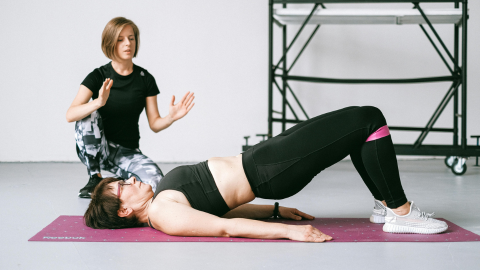
Many of us were introduced to the pelvis through its role in support and stability, with it often being presented as an anchor within the system. In practice, however, the pelvis is a moving, weight-bearing structure that interacts with the lower limb. This course offers a shift in perspective: from viewing the pelvis as an isolated, static structure to understanding it as a dynamic part of a connected system.
We will discuss movement of the pelvis, and drawing on our foundational knowledge, we will explore muscular connections between the pelvis and lower limb. There will be emphasis on how these connections can expand clinical reasoning and shape conversations with patients. In this way, viewing the pelvis through a broader lens can support a deeper understanding of the patient's experience.
Relevant to musculoskeletal, chronic pain, and pelvic health clinicians, this course aims to provide concrete, anatomically grounded knowledge in support of a more integrated, whole-person approach to understanding and treating the pelvis.
Learning Objectives
Upon completing this course, participants will be able to:
- Describe movement of the pelvis in relation to the cardinal planes, lower limb, and functional tasks
- Explain muscular relationships between the pelvis and lower limb
- Identify key considerations for assessing the pelvis and lower limb as an interconnected system
- Recognize exercise options that involve both the pelvis and lower limb
Audience
This course is designed for physiotherapists, kinesiologists, registered massage therapists, chiropractors, physicians, and athletic therapists who assess and treat the pelvis, hip, or lower limb. It's especially relevant if you work in musculoskeletal care, chronic pain, or pelvic health and regularly see patients whose presentations don't fit neatly into one region. The content builds on anatomy you already know, so it works whether you're early in your career or looking for a fresh perspective after years in practice.
Why This Course Matters
Many clinicians learn to think of the pelvis as a stable anchor rather than a moving part of the kinetic chain. That framing can limit clinical reasoning when a patient's symptoms don't resolve with pelvis-only or lower-limb-only treatment.
This course builds on the muscular relationships between the pelvis and lower limb, giving clinicians a broader lens for assessment and a stronger foundation for conversations with patients about how their symptoms connect. For anyone treating musculoskeletal, chronic pain, or pelvic health presentations, that shift from an isolated to an integrated view can open up assessment and treatment options a narrower approach would miss.
The instructors

Physiotherapist
Jane Bruce is a physiotherapist based in Nanaimo, BC, Canada, where her practice focuses on pelvic health and chronic musculoskeletal issues. She has 15 years of clinical experience spanning kinesiology, musculoskeletal physiotherapy, and pelvic health.
Jane's clinical perspective has been shaped by her training in whole-body paradigms and years of hands-on experience with complex presentations. Her training includes The Thoracic Ring Approach™, ConnectTherapy™, acupuncture, and pelvic health. Above all, she values integrating this knowledge to address the whole person. Jane has developed educational materials, consulted for, and mentored other clinicians in applying integrated, whole-body approaches. She aims to help others expand how they assess and treat patients whose symptoms don't resolve with conventional approaches.
Material included in this course
-
Course Materials
-
Welcome and Downloadable Resources
-
Full Presentation
-
Feedback
-
Summary, Knowledge Check, and Eval
-
Summary and Key Insights
-
Knowledge Check
-
Course evaluation
Is a certificate of completion included with this course?
Once you have completed the course, a certificate of completion (including learning hours and course information) will be generated. You can download this certificate at any time. To learn more about course certificates on Embodia please visit this guide.
This can be used for continuing education credits, depending on your professional college or association. If this course has been approved for CEUs in specific jurisdictions, it will be noted on the course page and CEU information may be added to your course certificate. Please read this guide for more information.
How can I get this course for free?
Embodia Membership gives you access to a wide range of evidence-based courses, clinical tools, and resources all in one place. As a member, this course (and many others) is included at no additional cost, helping you save time and money while staying up-to-date in your practice.
If you’re not yet a member, non-members can still access the course for a one-time fee. Joining Embodia unlocks this course plus hundreds of hours of additional education and clinical resources, making membership the most convenient and cost-effective way to continue learning.
You can learn more about membership options available on the Embodia membership pricing page.
Has this course been approved for CEUs (Continuing Education Units) for Physical Therapists and Physical Therapy Assistants in the US?
Yes, Embodia is a rule-approved CE provider of the PT Board of Florida (# 50-54793), a licensed CE sponsor of physical therapy continuing education by the Illinois Department of Financial & Professional Regulation (IDFPR #216.000415), an approved provider of continuing education by APTA Massachusetts, an approved provider of the Oklahoma Board of Medical Licensure & Supervision - Physical Therapy (#50-54793), and an approved provider of continuing education for Physical Therapists and Physical Therapist Assistants in California (CA) by CEUapproval.com, a recognized approval agency of the Physical Therapy Board of CA.
Courses approved by other state boards in the following jurisdictions are likely accepted for licensure credit based on the state regulation:
AL | AK | AR | CO | CT | DE | GA | HI | ID | IL | IN | IA | KS | KY | ME | MA | MI | MO | MT | NE | NH | NC | ND | OK | OR | PA | RI | SC | SD | UT | VT | VA | VI | WA | WI | WY
Please reach out to your state licensing board to confirm. If you have a specific question about CEU approval for this course in your state, please direct your inquiry to info@ceuapproval.com
The following states are not pre-approved: AZ, DC, LA, MD, MN, MS, NM, NV, NY, NJ, OH, TX, WV
Participants licensed in states not pre-approved may file for individual approval using the instructions on this document.
US PTs and PTAs: How many CEUs has this course been approved for?
This course has been approved for 1 CEUs (Continuing Education Units) for Physical Therapists and Physical Therapy Assistants in the US. Please see the FAQ 'Has this course been approved for CEUs (Continuing Education Units) for Physical Therapists and Physical Therapy Assistants in the US?' for a detailed list of the approved states. In order for your US jurisdiction information to appear on your course certificate, you must complete your jurisdiction information on your Embodia profile as per this guide.