
Should You Start a Podcast? A Pelvic Health Physio's Take
By: Melissa Dessaulles∙ Estimated reading time: 5 minutes
By: Melissa Dessaulles∙ Estimated reading time: 5 minutes

Why I Started a Podcast, and What It Gave Back to My Practice
Hi, I'm Melissa Dessaulles, a physiotherapists based in Kelowna, BC. I've been practicing since 2006, with the majority of my career focused on pelvic health. Alongside my clinical work, I also mentor physiotherapists who are newer to the field.
When I first started focusing on pelvic health in 2013, I was using Instagram and Facebook as a way to educate people, raise awareness about pelvic health, and build my practice. And it worked! There was a lot of interest, my following grew, and it was exciting to see people becoming more curious about a topic that, at the time, wasn't being talked about nearly enough.

"How can we do a better job of connecting the dots for people?"

But over time, things changed. Social media became increasingly saturated with health information. Some of it was excellent, some was misleading, and a lot of it was conflicting. I was finding it increasingly difficult to share meaningful, nuanced information in a 30-second video or a few slides on Instagram.
At the same time, I was noticing a few things in my clinical practice.
Patients were often arriving with very little understanding of their symptoms, let alone the treatment options available to them. Our healthcare system can feel incredibly siloed, and even as healthcare providers, we don't always have a great understanding of what other professionals do or what they can offer our patients.
I kept coming back to the same thought: How can we do a better job of connecting the dots for people?
Why a Podcast?
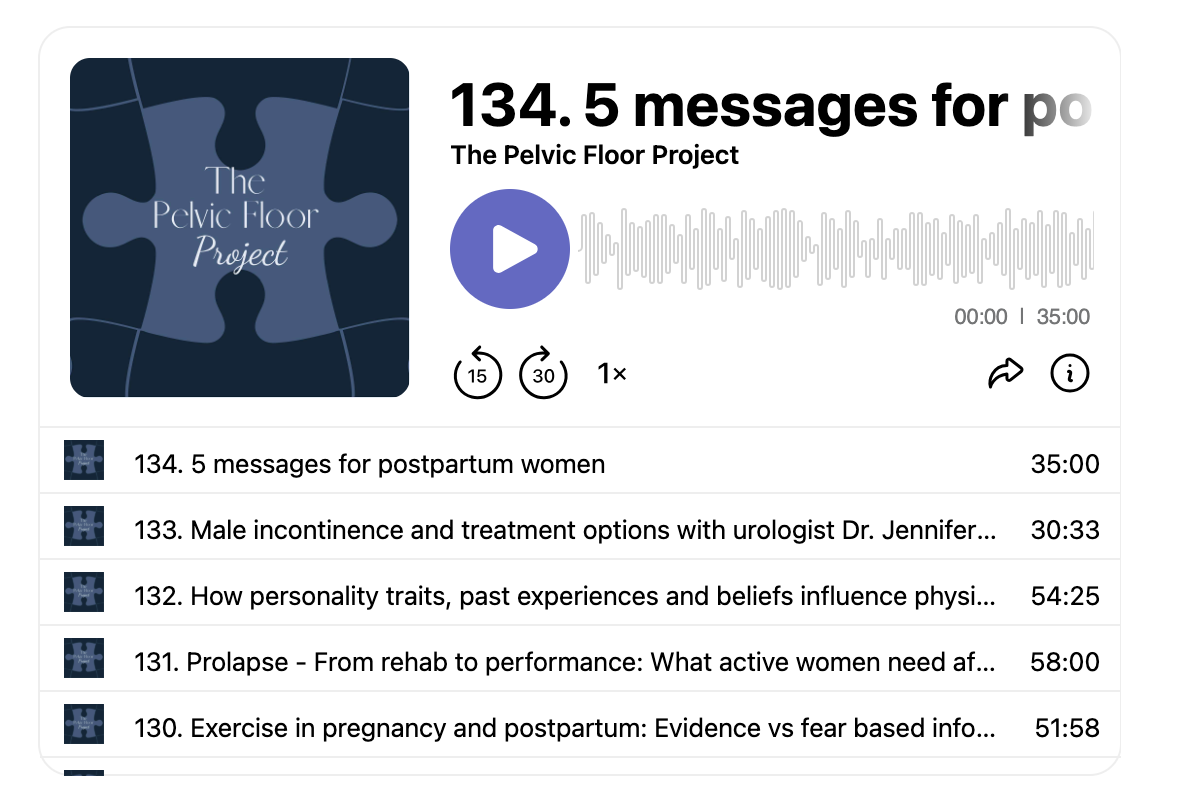
In 2021, I decided to give podcasting a try, and The Pelvic Floor Project was born. My goal was to create a space where I could have conversations with other healthcare professionals, explore different perspectives, and help listeners better understand their bodies and their options.
One of the things I love most about interviewing other experts is that listeners get to hear the discussion unfold. Rather than simply being told what to do, they get a glimpse into the clinical reasoning behind different treatment approaches.
"I learn something from almost every guest I interview."
And the learning goes both ways.
I learn something from almost every guest I interview, and I hope that along the way, my guests also gain a better understanding of what pelvic health physiotherapy has to offer.
What Does It Actually Cost to Produce a Podcast?
I think it's important to be transparent about this because podcasting is definitely more work than it might appear!
I typically release an episode every other week from January to May and again from September to December, for a total of approximately 16-18 episodes each year.
For each episode, I spend roughly:
- 1-3 hours brainstorming topics, researching potential guests, reaching out, and coordinating schedules.
- 60-90 minutes recording the interview.
- 2-3 hours editing and creating content to share the episode through Instagram, my blog, and YouTube.
My husband helps with some of the editing, and I also pay someone for approximately eight hours per month to help with YouTube content creation relation to each episode.
In terms of equipment and hosting, my microphone cost around $300, and I pay approximately $25 per month for Buzzsprout, the platform that hosts and distributes my podcast to Spotify, Apple Podcasts, and other listening platforms.
But by far, the biggest investment is my time.
I've been fortunate to partner with some wonderful sponsors over the years. These partnerships allow me to introduce listeners to products and services that I believe in, while helping to offset some of the costs of producing the podcast.
But I'll be transparent: sponsorship revenue doesn't come close to covering the time I put into it.
So why do I keep doing it?
What Has Podcasting Given Back to My Practice?
There are a few benefits that I didn't fully appreciate when I first started.
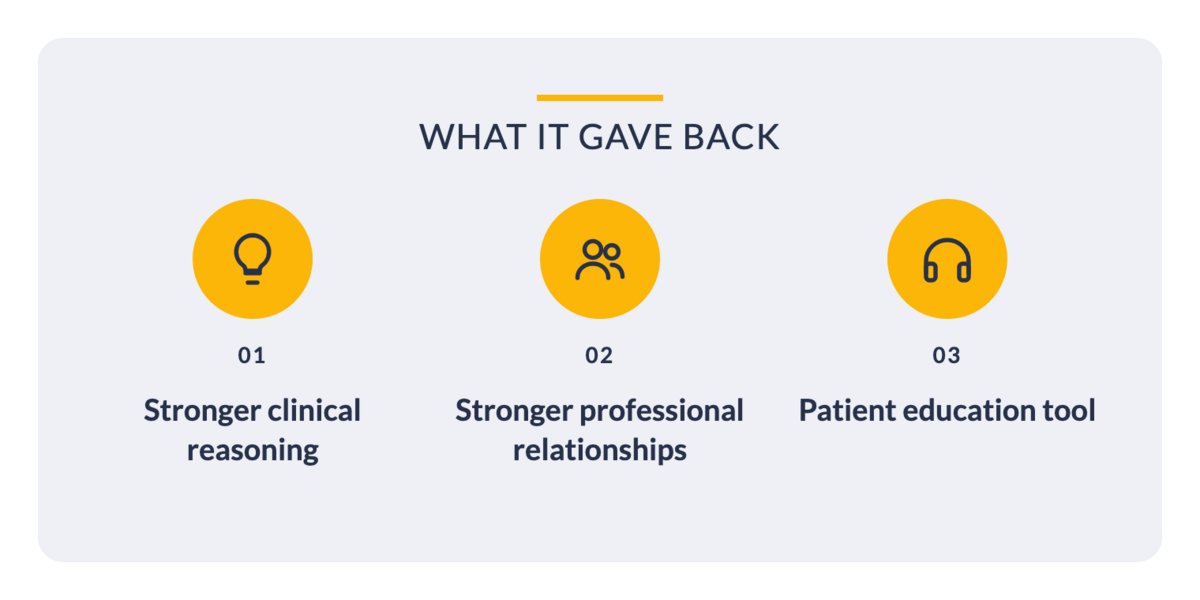
1. It's Made Me a Better Clinician
Preparing for podcast interviews pushes me to dig into the research, question what I think I know, and consider different perspectives.
As someone who mentors other physiotherapists, I've always valued understanding the why behind what we do clinically. Podcasting has given me another reason to keep learning and challenging my own thinking.
There have been plenty of interviews where I've walked away thinking, "Huh, I hadn't thought about it that way before."
And I love that.
2. It's Strengthened Relationships With Other Healthcare Professionals
I've always been a big believer in collaborative care.
No single healthcare professional has all the answers, and I think our patients benefit enormously when we understand what others bring to the table.
I make an effort to include local healthcare professionals on the podcast whenever possible. These conversations have helped me develop relationships with specialists and other clinicians in my community, and I've become much more comfortable reaching out to people I might not otherwise have connected with.
"No single healthcare professional has all the answers..."
Something I've come to appreciate through these conversations is that most of us are doing the best we can with the knowledge, time, and resources available to us. We don't always know what expertise exists right in our own communities, and simply having these conversations can help bridge some of those gaps.
It's also led to more referrals and helped me build confidence and credibility among my peers. But I hope the benefits extend beyond my own practice. When other healthcare professionals have a better understanding of pelvic health physiotherapy, that has the potential to benefit all pelvic health physiotherapists in our community.
And ultimately, our patients.
3. It's Become One of My Most Valuable Patient Education Tools
This is probably the biggest benefit of all.
Some patients find me through the podcast. They've listened to an episode or two, have a sense of personality and approach to care, and decide that I might be a good fit for them.
I think that's a valuable benefit in itself. There are plenty of options when choosing a healthcare professional, and the podcast allows people to get a sense of my experience, what I value, and how I approach patient care before they ever walk through my door.
Others arrive having never heard of it.
Either way, it's rare that a patient leaves my treatment room without me recommending at least one podcast episode!
I spend a lot of time helping patients understand their symptoms and the different options available to them. But there's only so much information we can cover in a single appointment, and not everyone is ready to absorb it all at once.
The podcast gives people an opportunity to revisit information, hear different perspectives, and continue learning at their own pace.
And importantly, not all treatment options fall within our scope of practice as physiotherapists.
Sometimes the best option for a patient might involve medication, a medical procedure, surgery, or support from another healthcare professional.
I want my patients to understand those options too.
My hope is that whether they return to my treatment room or move on to another healthcare provider, they feel more informed, more confident, and better equipped to participate in decisions about their care.
"It's rare that a patient leaves my treatment room without me recommending at least one podcast episode!"
So, Should You Start a Podcast?
My first question would be: What's your goal?
If you're looking for a way to make money, podcasting probably isn't the best place to start!
For me, it's much more of a passion project and a way to contribute to public education than it is a business venture.
But if you enjoy learning, connecting with others, and sharing information, it can be incredibly rewarding.
It doesn't necessarily have to be a podcast. It could be a blog, a YouTube video, or another educational resource that allows people to access reliable information when they need it.
I'd encourage you to think about the gaps you're hoping to fill.
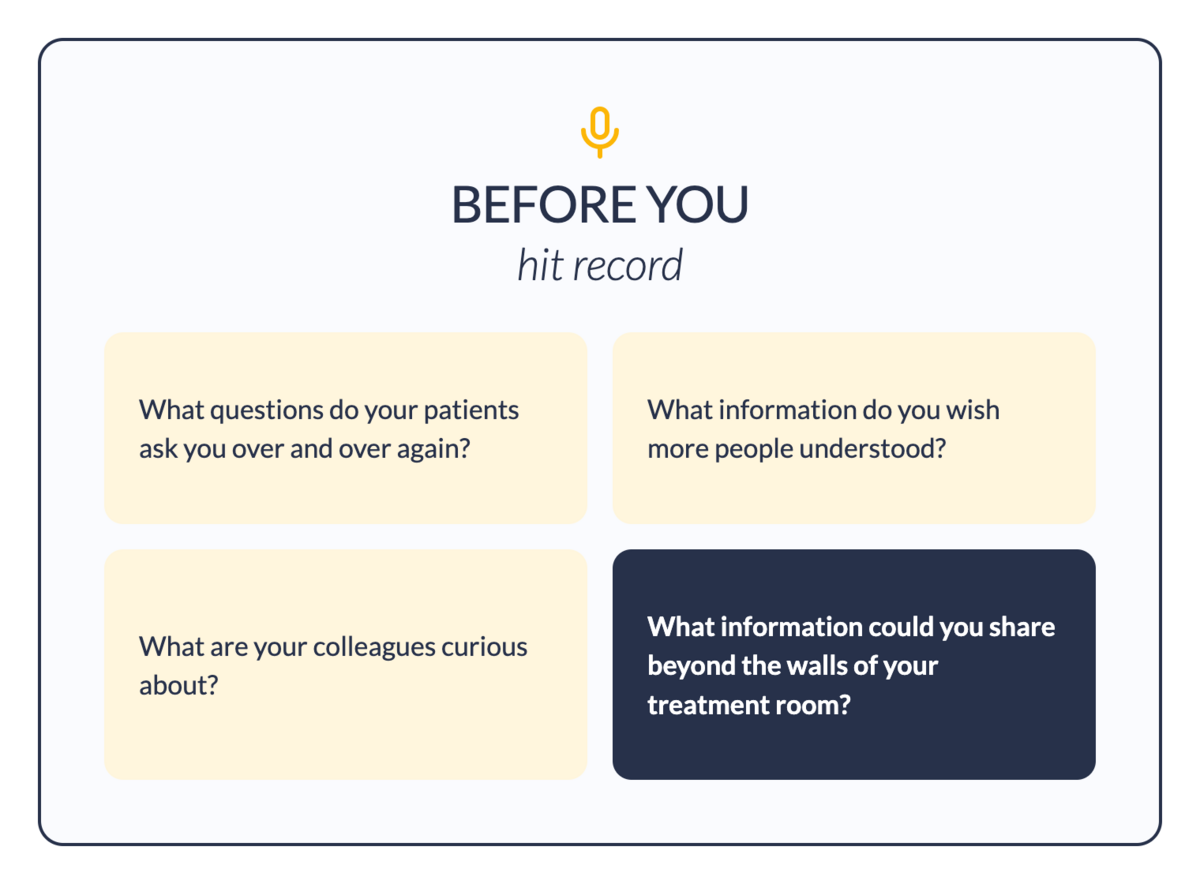
What questions do your patients ask you over and over again?
What information do you wish more people understood?
What are your colleagues curious about?
And perhaps most importantly, what information could you share beyond the walls of your treatment room?
More About Melissa Dessaulles

I've recently written an option paper for the Journal of Pelvic, Obstetric and Gynaecological Physiotherapy exploring the opportunities and challenges of podcasting in pelvic healthcare. One of the central messages is that podcasts have the potential to make healthcare information more accessible, encourage interdisciplinary learning, and support more informed conversations between patients and their healthcare providers. But like any form of health communication, we also need to think critically about the quality of information being shared, who we're reaching, and who we might be leaving behind.
Ultimately, It's not about the platform we choose, but how we use it to share meaningful information, connect with others, and improve the care we provide.
Resources:
- Check out The Pelvic Floor Project for Melissa Dessaulles' podcasts and more
- Visit Embodia Academy for more pelvic health content