
Proper Squat Form for Women: 3 Myths for Physios
By: Sonia Gavrilova, 2nd year UofT MScPT student ∙ Estimated reading time: 10 minutes
By: Sonia Gavrilova, 2nd year UofT MScPT student ∙ Estimated reading time: 10 minutes
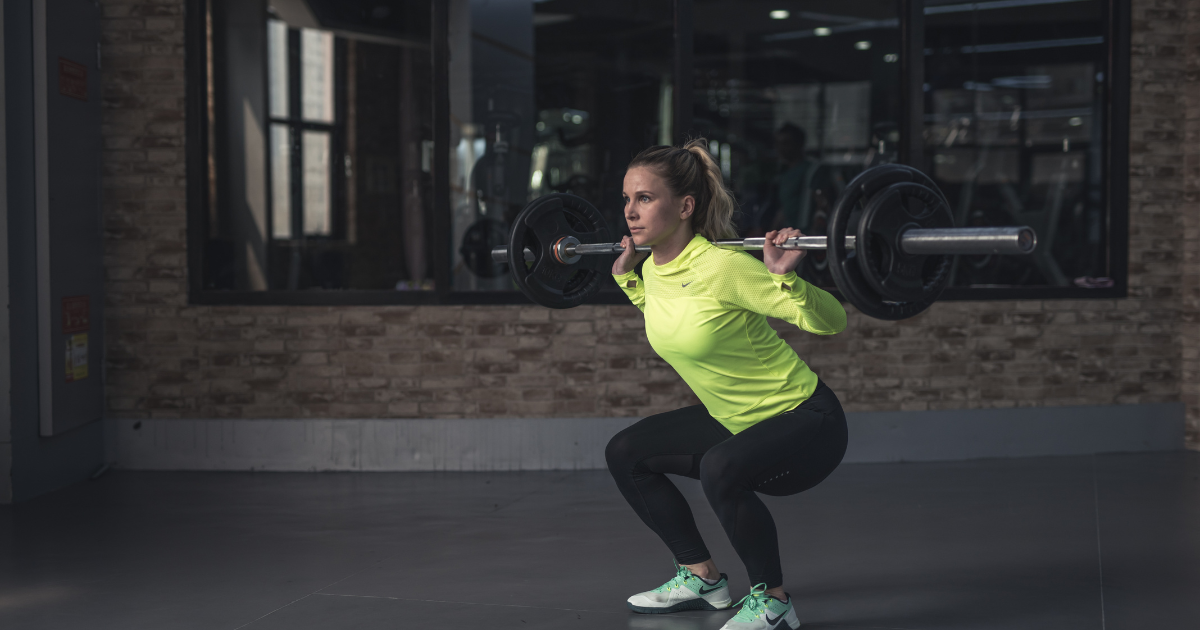
Squat Cues You've Definitely Heard (and Probably Used)
“Keep your feet shoulder-width apart.”
“Don’t bend your knees past 90 degrees.”
“Keep your chest up and torso straight.”
“Don’t lean forward too far.”
Sound familiar?
We've all heard these common cues and form fixes for squatting. Whether they come from colleagues, other health and fitness professionals, personal trainers, or social media personalities, many have come to treat them as the holy grail of “proper squat technique.”
And maybe we don’t want to admit it, but most of us (that means you, yes, you!) have given these same cues to our clients.
However, there's nothing necessarily wrong with that! As physiotherapists and exercise professionals, we're taught in school and in practice that technique matters, whether it's for strengthening, injury prevention, or reaching functional goals.
Technique and form can be important. What's even more important is taking the time to explore, question, and reflect on what good movement technique actually means. When strong narratives about movement exist, it's our job to challenge traditional cues and beliefs about “perfect form” so we can meet the individual needs of the client in front of us. After all, every body (not quite the same as “everybody”) is different, and every client has unique movement goals!
Why One-Size-Fits-All Doesn't Fit the Female Athlete
For too long, the fitness industry has been molded by rigid standards and “one-size-fits-all” approaches that overlook the complex, nuanced needs of different bodies. A black-and-white approach might feel comforting and give us quick “answers,” but the human body rarely fits such rigid ideas of right and wrong.
Now, enter the female athlete:
She is a powerful, complex figure who embodies both strength and adaptability in ways that go beyond traditional ideas of form and function. She doesn’t just fit the mold; she recreates it and makes it her own. Her anatomy, physiology, and even the ebb and flow of her hormonal cycles influence her training, recovery, and performance.
In his course, The Female Athlete, Antony Lo offers in-depth guidance on providing individualized, high-quality care to female clients for whom movement is a foundational part of their identity. A key part of Antony’s approach is challenging the beliefs and judgements we hold as health professionals about exercise and women’s health. The biggest shocker in his content? Learning how to be okay with being wrong. Gasp!
Check Out Antony Lo's
Female Athlete course
For all of us science kids (enjoy the Big Bang Theory reference below), being wrong can be terrifying. Don’t worry, you are definitely not alone. But it does raise the question: how can we learn and grow as practitioners if we’re never wrong?

The Core of it All: Why Pelvic Anatomy Matters for Every Female Athlete
For the female athlete, a strong understanding of pelvic anatomy isn’t just an academic exercise. It’s the gateway to improving performance, reducing injury risk, and unlocking new levels of athletic potential. So, what sets the female anatomy apart, and why does it matter when it comes to improving foundational movements like the squat?
Now, let’s shine a spotlight on… drumroll, please… THE FEMALE PELVIS!

The Pelvis is an Absolute Powerhouse
-
It provides structural support for the upper body stability during movement.
-
It protects important organs, including the reproductive, urinary, and lower digestive organs.
-
It has features that make it particularly suited for reproduction. For example, the female pelvis is typically wider than the male pelvis to allow for childbirth.
-
It serves as a framework for the pelvic floor muscles (ding, ding, ding, key term!), which support the pelvic organs, help control urination and defecation, and contribute to sexual function.
-
It's an attachment point for many muscles and ligaments, including the core muscles that stabilize the trunk and the muscles of the lower limbs.
As we can see, the female anatomy is far from simple, as it has a variety of complex and necessary functions.

So, let’s ask ourselves: why would movement technique for the female athlete be as simple as “keep your feet shoulder-width apart?”
For a more in-depth exploration of the pelvic floor anatomy, check out this course by Antony Lo!
Check Out The Female Athlete Lite
with Antony Lo
Why Squats?
Squats are one of those compound movements you just can’t run away from. They're always there because they're that foundational.
Squats mimic movements we do every day, like sitting down, standing up, and lifting objects. They're also incredibly comprehensive, since they hit multiple muscle groups, such as the quadriceps, hamstrings, glutes, and core. For the female athlete, squats can also help improve power output, sprint times, explosiveness for plyometrics, and overall lower body strength.
This means that, whatever your client’s goals are, squats can most likely help them get there.
As they say, definitely don’t skip leg day!
Who You Gonna Call? Myth Busters!
Now that we’re armed with knowledge and an open mind, let’s tackle some common myths about squat technique and the pelvic floor!
Myth #1: Heavy Squats Will Damage the Pelvic Floor
Squatting heavy has long been labelled “unladylike”. One reason is the belief that adding load will necessarily increase intra-abdominal pressure (IAP), which is thought to harm the pelvic floor. The clinical concerns usually raised are urinary or fecal incontinence and pelvic organ prolapse.
So, what exactly is IAP?
IAP is the pressure inside the abdominal cavity. It pushes outward on the structures that surround the abdomen, including the abdominal wall, the diaphragm, and the pelvic floor muscles, fascia, and connective tissue. It isn't fixed. It rises and falls with breathing, body position, coughing, and physical activity.
While the common belief is that heavy lifting and high-intensity exercise generate the highest IAP, the evidence doesn't quite support this. In the Female Athlete course, Antony highlights a couple studies that measured IAP during different movements. In one study, lifting 15 lbs from the floor to the counter generated 47.5 to 54.6 cmH2O in IAP, while spontaneous laughing generated up to 85.5 cmH2O!
Wait, so laughing can generate that much IAP, but a crunch only generates 12.4 - 23.8 cmH2O?
Yes, indeed!
Even more surprising: Other studies show that functional tasks, like standing up from a chair, lead to a higher IAP than abdominal exercises that are considered to be a “strain” on the pelvic floor muscles.

A quick research spotlight here:
A study by Middlekauff and colleagues in 2016 compared pelvic muscle strength between two groups of nulliparous women between 18-35 years of age, one of which consisted of CrossFitters training at least three times per week, and the other consisted of recreationally active females who did not participate in strenuous exercise. Both groups were followed for 6 months, with the non-strenuous group participating in self-paced walking for 20 minutes, and the strenuous exercise group participating in exercises such as deadlifts and push presses at 80% of their 3-rep-maximum.
Can you guess what this study found?
Despite very different exercise histories, there was no significant difference in pelvic floor muscle strength between the two groups.
If lifting strains the pelvic floor muscles and forces them to engage, wouldn’t we expect there to be a difference between these two groups? Especially with exercises as vigorous as what CrossFit athletes do!
So, what can we take from this?
Ultimately, everyone is an individual and moves their body differently! Just because you are lifting heavy weight as a woman, does not mean that you are necessarily straining your pelvic floor muscles. IAP is much more nuanced than that and there can be multiple factors to consider when working with your female athlete clients.
If you’re curious to learn more about pelvic health and working with female athletes, check out this course by Antony Lo: The Female Athlete - LITE.
Myth #2: There’s a “right” and “wrong” squat depth
Recall that narrow squat width we touched on? Or that *optimal* depth? What about making sure your knees never go past your toes, or that squatting too low is dangerous?
Well, that one can be attributed to overgeneralization. Oh yeah, and the male pelvis.
And if we have learned anything thus far, it’s that the female pelvis is very, very different. Therefore, it’s worth exploring how your female clients move, examining their range and anatomy, being curious about the sensations in their body, and figuring out what squat fits them, instead of making them fit a certain squat.
Let’s explore optimal squat depth and foot angle in relation to the infamous butt wink ;)
The butt wink has its name because it’s like the glutes are winking at you at the bottom of the squat, and it happens because the pelvis tilts posteriorly, either due to trunk flexion, or because further hip flexion cannot be achieved at the bottom of a squat. If the squat stance is too narrow, it might cause that pelvis to tilt prematurely.
Butt winks can also occur due to anatomy or balance challenges once descending into a squat, so it is important to examine several factors! The butt wink can compromise the lower back, especially if heavier loads are being lifted, but this is not always the case. In order to play around with the butt wink, we simply need to experiment with squat depth and foot angle!
One way to do this is to squat all the way down and widen the legs so the feet are flat on the floor, and then “duck walk.” This entails shifting your weight from side to side until you are able to lift the opposite foot, while maintaining that hip external rotation. Does it look ridiculous? Yes. Will it possibly show you a more comfortable way to squat? Also yes.

Once you find that “duck” position, simply stand up and try a few squats with your feet remaining in that same stance.
Do you still see a butt wink?
If you want to learn more fun techniques to help your clients find the squat depth that is best suited to their body, check out Antony Lo’s courses here.
See Antony Lo's courses on Embodia Academy
Myth #3: Quad dominant or glute dominant? But I can’t feel it in either!
We have all heard that leaning forward during a squat will bias the glutes since it places them in a stretched position, while keeping the torso straight up will bias the quadriceps by minimizing gluteal involvement. There is also a lot of discussion out there about how some naturally have more quadricep involvement, and others naturally have more gluteal involvement during a squat. While individual variations in muscle fiber composition, strength, and activation exist, someone’s movement patterns will often matter more than any “innate” dominance they might have.
“Feeling it” in specific places is not necessary, and does not mean that the relevant muscles are not engaging. Instead of your clients feeling that they are doing something wrong, try the following squat technique by Antony Lo to determine what the most comfortable trunk angle is for your female clients!
Follow the steps in the previous section to get your patients to find their optimal depth and foot angle. Use a dowel, stick, or some sort of tactile cue to help your client maintain that same trunk angle they were able to maintain in the duck position as they come straight up, like an elevator, until their knees are nearly extended. At this point, they shouldn’t be able to go any higher without feeling like they have to change their trunk’s position.
From this starting point, you can experiment with your clients with different levels of trunk flexion or extension, and see how they feel during that squat!
Remember, those small technique tweaks can help your clients hit different goals for their squat!
Now that we've busted this myth, let’s take a moment to recap the key takeaways—so you can keep those squat sessions flowing!
Key Takeaways for the Perplexed Physiotherapist
If your main take-away about squat technique is that “it depends” (my personal favorite as a physiotherapy student) and that all of this is “nuanced,” then that means I did my job!
Sorry, I’ll just take a moment to pat myself on the back.
All jokes aside, while embracing uncertainty doesn’t seem like a direct answer for everything, that is an answer in itself! As physiotherapists and exercise professionals, it is our duty to embrace complexity and look at each client individually, as opposed to finding an approach that we tell ourselves will work for everyone.
When it comes to finding that perfect squat for the female athlete, make sure you:
-
Listen to your client and ask open-ended questions to learn more about their goals, movement patterns, and exercises that bring them fulfillment.
-
Refer to fellow experts, such as pelvic floor/women’s health physiotherapists or OBGYNs, when there might be a cause for concern in the realm of pelvic health.
-
Don’t underestimate the power of technique tweaks to minimize pelvic symptoms or discomfort that might arise during exercise. Try out some of the strategies in this blog to help your client find that pain-free squat!
-
Be open and aware of the stories you tell yourself about your profession, and be even more open to being wrong and growing as a professional.
Out with the old, and in with the new!
Meaning, out with those old and outdated squat techniques, and in with the unique and individualized squats that make your female athlete clients fulfilled!
More Content from Antony Lo:
- Intra Abdominal Pressure and Strength Training
- Stop Hurting Women with Exercise - Part 1
- The Female Athlete Online Course
- The Female Athlete - LITE
- The Female Athlete Course - Online Edition (V2)
Pelvic Health on Embodia
Interested in expanding your knowledge and resources in the realm of pelvic health? Check out these resources on Embodia:
- Pelvic Health Practitioner Resources on Embodia
- Resource Blog: Free Templates for Pelvic Health Practitioners
- Read this blog to find out why women in France don't pee their pants when they laugh
- Yoga as a Pelvic Health Solution
References
Ashton-Miller JA, DeLancey JO. Functional anatomy of the female pelvic floor. Ann N Y Acad Sci. 2007 Apr;1101(1):266-96. doi:10.1196/annals.1389.034
Lowe K, Johnson G, Sari-Kouzel H, Hodges P. The effect of pregnancy and postpartum on the pelvic floor muscles. Am J Obstet Gynecol. 2016 Nov;215(5):593.e1-593.e8. doi: 10.1016/j.ajog.2016.02.031
Muscolino JE. Pelvic floor muscles (female) [Internet]. Learn Muscles; 2023. Available from: https://learnmuscles.com/glossary/pelvic-floor-muscles-female/
O’Dell KK, Morse AN, Crawford SL, Howard A. Vaginal pressure during lifting, floor exercises, jogging, and use of hydraulic exercise machines. International Urogynecology Journal. 2007 Dec;18:1481-9. doi: 10.1007/s00192-007-0387-8
Schimpf M, Tulikangas P. Evolution of the female pelvis and relationships to pelvic organ prolapse. International Urogynecology Journal. 2005 Aug;16:315-20. doi: 10.1007/s00192-004-1258-1
Weir LF, Nygaard IE, Wilken J, Brandt D, Janz KF. Postoperative activity restrictions: any evidence?. Obstetrics & Gynecology. 2006 Feb 1;107(2 Part 1):305-9. doi: 10.1097/01.AOG.0000197069.57873.d6
---
Date published: 16 December 2024
Last update: 4 December 2025

B.App.Sc.(Physio)(USyd)., Master in Manual Therapy (UWA)
Antony Lo is a physiotherapist from Australia and runs The Physio Detective service. He earned his degree from the University of Sydney and has been in practice since 1997.
He completed his post-graduate masters in Manual Therapy (Musculoskeletal Physiotherapy) from the University of Western Australia and commenced his Specialisation training in Musculoskeletal Physiotherapy.
He has been involved with treating CrossFit athletes since 2011 and has helped some of the world’s best CrossFitters at the highest levels through to beginners of all ages. He loves and participates in CrossFit and is a strong advocate for the sport. Through participation and through his work as a Physiotherapist at all levels of CrossFit, he has developed a model of treatment that utilises the best from Sports Science, Musculoskeletal/Sports Physiotherapy, Pain Science, and Women’s Health research to provide a realistic holistic model of care balancing the biopsychosocial model of healthcare.
He is NOT an employee of CrossFit, he does not represent or work for them in any way and his views and opinions are entirely his own. He holds a CrossFit level 1 – Trainer Certificate and is a CrossFit Football Coach/Consultant (now CrossFit Sports Specific Application). Antony has a wife and 3 beautiful children in the best city in the world – Sydney, Australia!